
Introduction
Tesla Inc. (NASDAQ: TSLA) has always captured attention in the financial world. But in 2025, the spotlight grew hotter. Why? Because political news began to move markets in unexpected ways.
This year, Clashes between Elon Musk and Donald Trump in 2025 sparked notable disruption across financial markets. The infamous Musk-Trump feud rattled investor sentiment and led to significant stock market fluctuations. Let’s explore what happened — and why it matters so much to anyone watching Tesla stock.
The Musk-Trump Feud and Immediate Impact
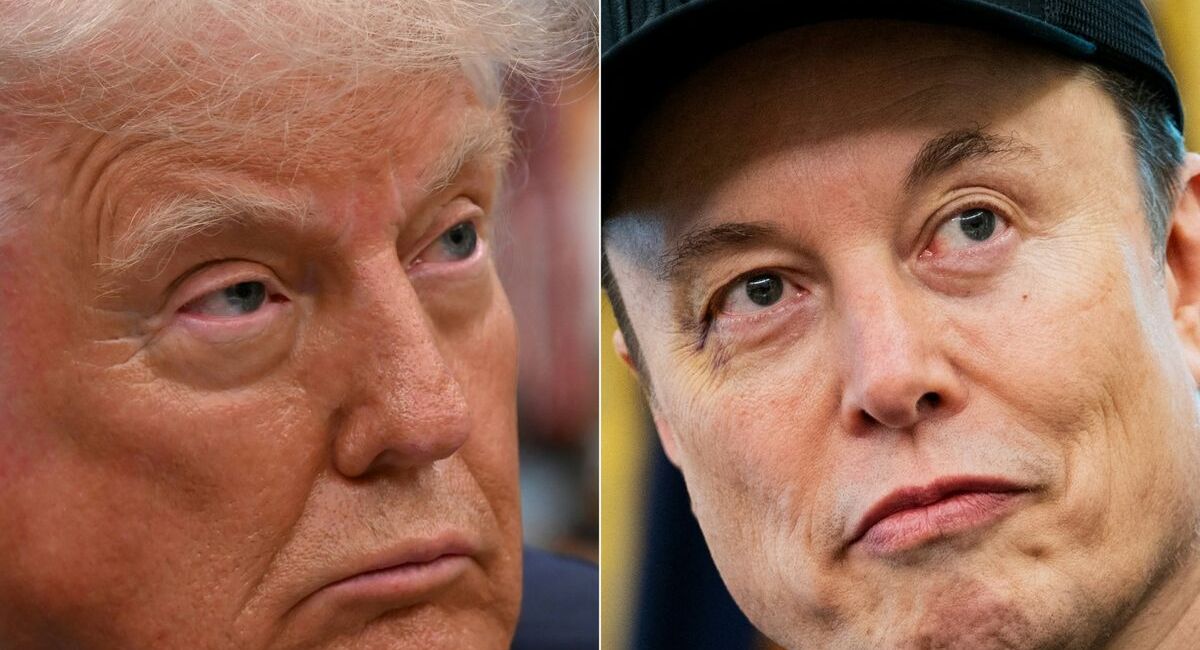
The feud began when Musk publicly condemned Trump’s proposed tax and budget reforms, calling them a potential threat to economic stability. His outspoken criticism triggered a sharp political exchange that soon dominated the headlines. He called it bad for the economy. Trump fired back, threatening to strip away government contracts and federal subsidies from Musk’s companies, including SpaceX and Tesla Inc. (NASDAQ: TSLA).
The ongoing tension between Elon Musk and Donald Trump has become more than a social media spectacle — it’s starting to shape investor sentiment and market reactions. Whenever high-profile clashes like this spill into public view, they can spark short-term volatility, especially in companies tied to the personalities involved, like Tesla stock and X (formerly Twitter).
Supporters of each side often translate their opinions into buying or selling behavior, creating unpredictable price swings. Meanwhile, investors eyeing the 2025 election landscape are factoring in how potential policy shifts or public influence wars might affect tech innovation, EV regulations, and stock market confidence.
The political dispute led to a sharp overnight drop in Tesla’s stock value. An estimated $150 billion in Tesla’s market value was erased in one day, representing one of the most significant financial setbacks in its history. Investors were forced to reassess the company’s valuation as fears over future revenue streams mounted.
Investor Sentiment and Market Volatility
Investor sentiment is the heartbeat of the stock market — a mix of fear, greed, hope, and hype that often moves prices more than fundamentals do. When investors feel optimistic, they pour money in, driving prices higher and fueling bullish trends. But when fear takes over — whether from bad news, political tension, or economic uncertainty — volatility spikes and markets tumble.
In financial markets, investor sentiment acts like the emotional pulse — optimism fuels rallies, while fear drives sell-offs. Even strong fundamentals can’t always hold against collective mood swings. When investors feel confident, Tesla stock and similar growth assets often surge as risk appetite increases. But when uncertainty rises — from political tensions, policy changes, or poor earnings — market volatility spikes and prices can swing sharply.
Smart investors pay close attention to this behavioral undercurrent. Tracking market psychology, fear and greed indexes, and trading volume trends helps anticipate shifts before they appear in price charts. Sentiment doesn’t just reflect the market — it often predicts its next move.
In short: emotions create waves, and volatility is how the market shows its mood swings. Smart investors don’t ignore sentiment — they read it, ride it, and know when to step back before the crowd flips.
The stock market often rises or falls based on the collective emotions of its investors.
And political drama can shake that confidence fast. The Musk-Trump feud triggered a wave of uncertainty about Tesla’s ability to secure government incentives and maintain a steady income.
Concerns over shifting economic policies and potential regulatory changes intensified the uncertainty, with many anticipating a wider market downturn. With Tesla’s known reliance on government incentives, any political threat posed real risks. The market responded with sharp, fast-moving market volatility.
Regulatory Risks and Policy Implications
Regulatory risks refer to the potential impact that government laws, financial regulations, or policy changes can have on businesses and markets. When new policies are introduced — such as tax reforms, trade tariffs, or environmental regulations — they can directly affect company profits, investor confidence, and overall market stability.
In stock market analysis, understanding regulatory and policy implications is crucial for risk management. Investors often monitor federal regulations, SEC policies, and economic governance updates to predict shifts in market trends, stock performance, and investment strategies.
Policy uncertainty can increase market volatility, while clear and growth-friendly regulations often boost market sentiment and investor confidence. Successful investors and analysts integrate regulatory compliance, macroeconomic policy, and political risk analysis into their decision-making process to stay ahead of sudden market disruptions.
Tesla’s growth depends heavily on clean energy policies and support from government programs. But Trump’s Big Beautiful Bill aimed to roll back critical EV tax credits. Eliminating EV tax credits alone could reduce Tesla’s profits by billions.
Even more concerning were threats to federal contracts related to autonomous vehicles and energy storage projects. A clear political climate shift suggested declining renewable energy support. Investors knew that less government help could hurt Tesla stock in the long term.
| Threat | Impact on Tesla |
| Removal of EV tax credits | Billions in lost profits |
| Loss of federal contracts | Slowed innovation |
| Policy shift | Weakened future growth |
Global Market Repercussions
The ripple effects of Tesla’s performance extend far beyond Wall Street. Because Tesla plays a central role in the EV industry and clean energy sector, any major movement in Tesla stock can influence global investor sentiment, market trends, and sector-wide valuations.
Tesla’s influence reaches well beyond U.S. borders — its stock movements often echo through global financial markets. When Tesla stock rises sharply, it boosts confidence in the EV industry, renewable energy investments, and even tech-heavy indices like the NASDAQ. On the flip side, any dip can trigger broader sell-offs, especially in automotive and green energy sectors worldwide.
International investors closely monitor Tesla as a bellwether for innovation-driven markets. Shifts in its valuation affect foreign exchange trends, commodity demand (like lithium and nickel), and global investor sentiment. Countries heavily investing in clean mobility — such as China, Germany, and India — often mirror Tesla’s market momentum.
In essence, Tesla doesn’t just shape the EV narrative — it influences how the world values progress, risk, and sustainability.
Positive earnings or expansion announcements often boost confidence in renewable energy stocks, while production slowdowns or policy conflicts can trigger market corrections and higher volatility. International markets—especially in Europe, China, and emerging economies—closely track Tesla’s growth since it signals where the broader EV transition and sustainable investment landscape might head next.
In short, Tesla doesn’t just move markets—it often sets the tone for them.
Tesla faced a 45% sales slump across Europe, with Germany emerging as one of the most affected markets.
German market sentiment soured as public sentiment turned against Tesla, and its public image suffered badly. Losing brand loyalty in such an important market could cause lasting harm.
Long-Term Implications for Tesla
Looking ahead, three factors will decide Tesla’s future. First, policy stability is key. Without steady rules, long-term growth prospects look shaky. Second, maintaining a positive public image is vital. Too many political controversies involving leadership can damage trust.
The long-term outlook for Tesla stock hinges on a mix of innovation, market demand, and global policy shifts. As one of the most influential players in the EV market, Tesla’s ability to stay ahead in battery technology, AI-driven automation, and sustainable energy production will directly shape its stock performance in the coming years.
Investors are closely watching how regulatory changes, interest rate trends, and economic stability affect Tesla stock volatility and market valuation. Supportive government incentives for clean energy could drive long-term growth, while stricter regulations or global supply disruptions may pressure profitability.
From an investor’s perspective, Tesla stock represents both high risk and high reward — a reflection of market sentiment toward innovation-led companies. Its success depends on consistent execution, product diversification, and strategic adaptation to an evolving global economy.
However, long-term success isn’t guaranteed — regulatory risks, market saturation, and economic uncertainty could still challenge Tesla’s momentum. The key lies in balancing innovation with adaptability.
Finally, the market depends on investor confidence. Without it, expect increased volatility and reduced investment. For Tesla to thrive, it must rebuild its standing in Washington and with global customers.
As emerging technologies reshape industries worldwide, tools like AI agents are also driving transformation — learn more in our guide on How AI Agents Are Transforming Business Automation in 2025
FAQS
How high will Tesla stock go in 2025?
Tesla stock’s performance depends on market trends and political developments, but analysts expect moderate growth amid ongoing volatility.
How much will Tesla stock be worth in 5 years?
Forecasts suggest that Tesla stock could appreciate steadily, although its future value hinges on innovation, competition, and global electric vehicle (EV) demand.
What will Tesla stock be worth in 2030?
By 2030, Tesla stock’s value will likely reflect advances in EVs, energy solutions, and autonomous tech, though exact predictions vary widely.
What if I invested $1000 in Tesla 10 years ago?
A $1000 investment in Tesla 10 years ago would have grown significantly, potentially exceeding $100,000, depending on market timing.
Can Tesla stock reach $1,000?
Reaching $1,000 is possible if Tesla delivers strong earnings and maintains innovation leadership, but market risks remain.
Conclusion
This year proved how fast political news can change the game for even the strongest companies. The Musk-Trump feud sent ripples through Tesla’s stock, shaking investor confidence along the way.
The damage was clear from the $150 billion market value loss to the plunge in European sales.
Going forward, Tesla Inc. (NASDAQ: TSLA) must carefully navigate the tricky world of government contracts, federal subsidies, and global politics. Only by restoring investor sentiment and public trust can it regain its former strength. While the path ahead may be tough, Tesla’s story is far from finished.